
Written by: T. Aquila
The workplace should be a space where everyone can collaborate, share ideas, and achieve optimal results for their company and become the best versions of themselves.
Unfortunately, that isn’t always the case.
Often, we have no choice but to witness workplace harassment between our coworkers and supervisors. This can look like emotional abuse such as belittling, guilt-tripping, ostracization, and sabotage; sexual abuse such as catcalling, sending flirtatious online messages, and making objectifying comments about another person; and verbal abuse such as name-calling and sarcastic remarks. On the other hand, they can also be not as obvious; there are microaggressions, which are statements and actions that weren’t intended to be offensive or discriminatory, but are based on outdated or inappropriate assumptions of the person’s identity.
Further, there are times where stepping up when someone at work does something unpleasant doesn’t feel right. We end up becoming bystanders, and this can happen due to multiple reasons. Sometimes, we’re worried that we’ll risk our own jobs after calling out problematic behavior, especially if the action is committed by a figure of authority. Others may not know what the best course of action is when workplace harassment occurs.
When it is possible for us to intervene, speaking up against workplace harassment is always the better idea, even if we aren’t directly involved. If we remain silent, there’s a possibility that the perpetrator will continue their behavior, harming the victim’s wellbeing even further. At worst, the consequences of this behavior can be fatal.
Fortunately, there is something we can do as bystanders. If we happen to come across harassment in the workplace, follow these steps to minimize negative outcomes.
Before approaching someone in trouble…
- Assess the situation. Are you able to safely help them in any way? Would stepping in cause more harm than good? Your personal safety should be top priority.
- Be in a group. It’s typically safer to intervene when you are not alone. If you are on your own, it is sometimes better to report to a larger group of people and team up.
- Care for the victim. If possible, prioritize communicating with the person affected by the harm.
Direct action
When you come across workplace harassment, call out the negative behavior you just witnessed. Explain why their behavior is harming the other person. While explaining, do so as politely and calmly as possible to avoid further altercation. Stick to the exact situation and do not exaggerate what the other person did.
Example: You hear your supervisor demeaning another employee’s outfit for being “too revealing” even though she has already followed the company’s code of conduct. You come over to the two and say, “I think you are being disrespectful to [employee’s name] by shaming her fashion choice.”
Another approach you can use is to ask for clarification from the person committing the harm. This provides an opportunity for that person to reflect on what they have just said or done.
Example: Using the same situation as above, you ask, “Could you repeat what you meant by that? I’m not sure I understood what you said.”
Distract
If it’s impossible to directly intervene in the harmful interaction, you might want to do something noticeable enough for the situation to diffuse. This can look like interrupting the conversation by talking to the perpetrator, so that the other person can leave.
Example: You see a coworker “checking out” another coworker while tidying up your desk. You call that coworker to chat with you about your assignment, giving time for the other coworker to escape.
Alternatively, you can change the focus of the conversation as a signal to the other person that you do not agree with or support their statement.
Example: A coworker is talking about how another coworker’s lunch “smells bad.” To diffuse the situation, you say, “Can we talk about something else?”
Delegate
When it’s possible, asking for help from others around you can drastically improve the situation. After all, we are stronger in numbers.
Depending on the situation, you can reach out to your supervisor, HR manager, or even other coworkers.
Example: A coworker tells you that he and a number of your other coworkers have created a group chat where they belittle employees that are not part of the group. After the conversation, you inform your HR manager about this: “I was told about the existence of this group chat and it made me uncomfortable. I thought it was important that you knew.”
Document
Taking audio and visual proof of the workplace harassment you witnessed can be vital, especially if the incident has been repeated. By documenting the situation, the records can be used as evidence if you or the victim plan to file a formal complaint.
Documenting the situation can also help validate the harassment that occurred as it supports the victim’s testimony.
Delay
If you’re not able to intervene when workplace harassment occurs — whether directly or indirectly — not all hope is lost. Delaying support does not mean doing anything. It just means letting the situation deflate on its own before taking action.
After the harassment ends, you can come over to the person being harassed and check in on them. Let them know that you are here to support them. If there are other bystanders around, consider co-creating a plan if another incident happens in the future.
What to do afterwards?
After witnessing workplace harassment, we may feel like we have to report the incident as soon as possible. But the decision lies on the victim. Follow and honor their request.
If the victim asks for emotional support, validate their feelings with sentences like “I may not have experienced it, but I understand how stressful the situation was.”
If the victim asks for other forms of support, let them know what you can and cannot do as a bystander. Instead of saying “Let me know if you need anything,” it is best to be specific.
Examples:
- “Do you need help filing a complaint to HR?”
- “I have free time tomorrow, so I can accompany you to the police station. Would you like that?”
- “Should I get you lunch? We can order food delivery.”
Once the victim lets you know what they need, do your best to fulfill your promise. It’s never a good feeling to be stood up on.
Lastly, take care of yourself. Standing up against workplace harassment isn’t easy, even if you only witnessed the situation. Seeking professional mental health support might be useful if you feel distressed.
The takeaway
Witnessing workplace harassment may be stressful, but there are ways to speak up against it and support those who are impacted. By stepping up, we are contributing to a healthier, safer, and more productive work environment.
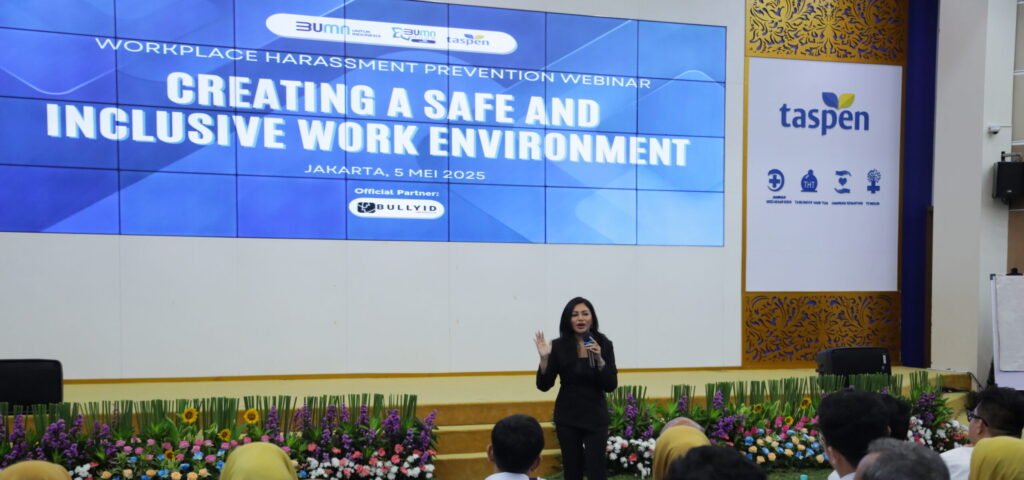
This article is part of our Workplace Harassment Prevention Training material for corporations. Over the last six years, we have helped more than 100 businesses, schools, and organizations create a harassment-free workplace through our programs, including PT Taspen Persero and Water.org. If you’re looking for evidence-based sessions that directly addresses your company’s needs, check out our portfolio here: https://bullyid.org/workplace-harassment-prevention/