
Digital Safety
Prevention Hub
If you have ever felt unsafe online, remember: it is never your fault. This hub walks with you step by step, from building healthy digital relationships, to recognising harmful behaviour early, to understanding consent and the law, so harm is prevented before it starts.

01 — Understand the harm
Name what causes harm.
You cannot prevent what you cannot name. These three forms of digital abuse are far more common than people think, and none of them are ever the survivor's fault.
Technology-Facilitated Gender-Based Violence
Any act of violence carried out, assisted or amplified through digital technology, directed at a person because of their gender or sexuality, or disproportionately affecting a particular gender.
Key things to know
- Cyberstalking and online sexual harassment
- Doxxing and threats to expose private information
- Tech-facilitated coercive control and monitoring
Non-Consensual Intimate Images
Creating, sharing, or threatening to share intimate images or videos of a person without their freely given consent. This includes content originally shared within a relationship, or obtained through hacking or sextortion.
Key things to know
- Consent to create ≠ consent to share
- Consent can be withdrawn at any time
- Sharing after a breakup is abuse, not "revenge"
AI-Generated Explicit Content
Intimate images, audio or video of a real person produced or altered by artificial intelligence, such as deepfake pornography or "nudify" apps, without that person's consent.
Key things to know
- The person never consented; the harm is real
- Creating, requesting, viewing or sharing it causes harm
- In many places, including Indonesia, it is a crime

AI abuse in three facts
02 — Healthy digital relationships
What care looks like online.
A healthy digital relationship carries the same respect, trust and boundaries as a healthy offline one. Knowing what good feels like makes harm easier to spot early.
Green flags: what healthy looks like
- Asks first before posting photos, tagging, sharing chats, or turning on location.
- Respects "no" without pressure, sulking, or guilt-trips.
- Trusts without surveillance: no demanded passwords, trackers, or phone checks.
- Celebrates your voice: your friends, interests and expression online are supported.
- Disagrees with respect: no threats, humiliation, or public shaming.
- Your image belongs to you: your body, your photos, your choices. Always.
03 — How harm escalates
Slide to see how harm escalates.
Abuse rarely appears out of nowhere. Drag the slider to see how "normal" behaviour can slide into coercion and crime, and where Indonesian law draws the line.
04 — Recognise harmful behaviours
Harm rarely starts loud.
Technology-facilitated abuse often begins subtly, dressed up as "love", "jokes", or "caring". Recognising these patterns in others and in ourselves is primary prevention.
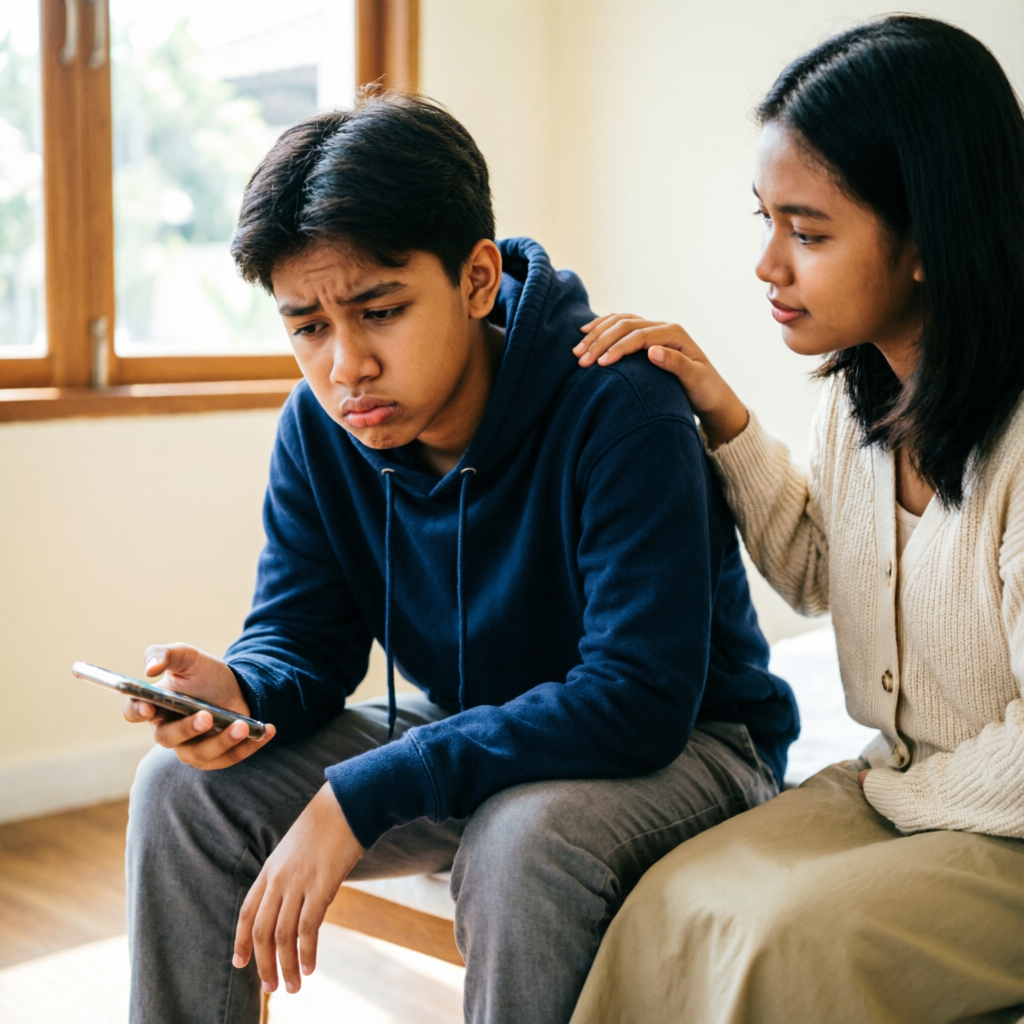
Controlling & coercive red flags
- Digital monitoring: demanding passwords, reading messages, checking likes and followers.
- Location tracking used to question, punish, or control.
- Isolation: dictating who you may follow or message.
- "If you loved me, you'd send it." Pressure disguised as love is coercion.
- Threats to share private content if you say no or leave.
- Doxxing: exposing your address, workplace, or identity to harm you.
Image & AI abuse red flags
- Sharing an ex's intimate images "for revenge".
- Forwarding intimate content in group chats "as a joke".
- Using "nudify" apps or AI tools on anyone's photos, ever.
- Creating or sharing deepfake explicit content of real people.
- Saving or requesting non-consensual intimate images.
- Rating or sexualising someone's body in comments and DMs.
Mini game: flag it!
Read each behaviour and choose: red flag or green flag?
05 — Equality & consent
Consent is the whole conversation.
Equality means no one owns anyone's body, image, or private life. Consent applies to photos, videos, tags, location, messages, and AI content alike. Remember FRIES.
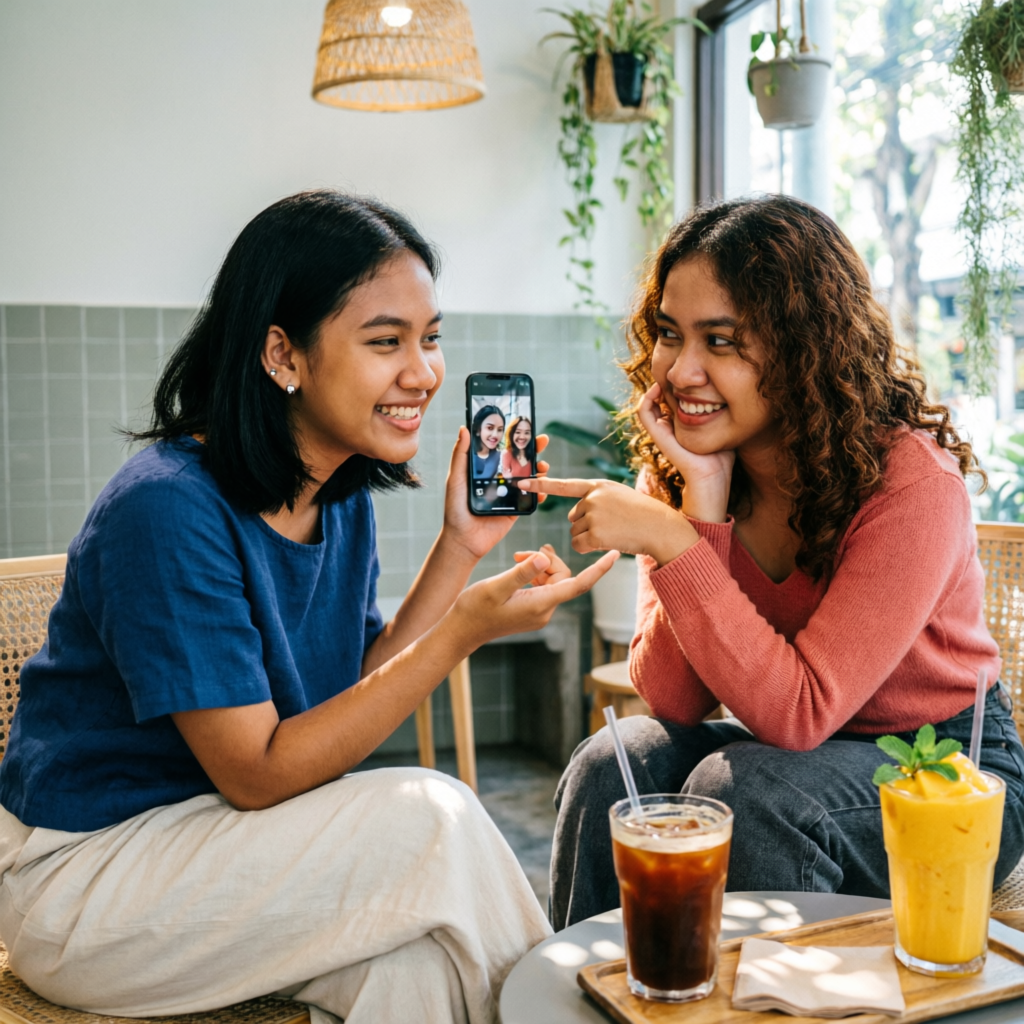
Quick quiz: respected or violated?
Answer each question. The next one appears when you do.
06 — Real scenarios · Indonesian law
Is this regulated in Indonesia?
Read real-life digital scenarios styled like chat messages. Decide whether Indonesian law regulates them, then reveal the answer with the exact regulations.
Educational summary, not legal advice. Key laws: UU ITE, UU TPKS, UU PDP.
07 — Unlearning coercive norms
Peel the myth. Find the reality.
Harmful norms survive because culture repeats them. Tap each sticky note to flip it over and reveal the reality, then pin a commitment of your own.
08 — Daily prevention habits
Small habits, big protection.
09 — Self-reflection
Look inward, honestly and kindly.
Prevention includes examining our own habits. This private check-in never sends or stores your answers.
Journal prompts for deeper reflection
Write directly on each note. Your words stay on your device.
Where did I learn that control equals love? What would I teach a younger person instead?
When did I last feel entitled to someone's image or attention? What was underneath that feeling?
What would I do differently online if respect, not fear, guided every message I send?
10 — Violence-preventive behaviours
Choose prevention, daily.
My prevention commitments
Personal and private. A living agreement with yourself and your community.

From bystander to upstander
- If you see abusive content online, don't share, don't save and click report. Every forward multiplies harm.
- Report the content and account on the platform.
- Reach out privately: "I saw what happened. It's not your fault. I'm here."
- Challenge the group norm. One "this isn't okay" changes everything.
- Connect them to support. Bullyid App is free and anonymous.
11 — If harm happens
It's not your fault. There is hope. There is help.
If you are facing TFGBV, NCII, or AI-generated abuse, you do not have to face it alone. Bullyid App's trained counsellors will believe you and offer non-judgmental emotional support, practical advice and information.
Talk with a trained counsellor in a free, anonymous, non-judgmental space. Start a chat →
Understand your rights and options in plain language, before you decide. Explore legal support →
Help to document and report intimate images shared without consent. Get takedown support →
Secure your accounts, reduce unwanted contact, plan safer next steps. Protect your digital space →