
Independent Survey of Indonesia Non-Consensual Intimate Content Dissemination (NCII - TFGBV)
This summary outlines the findings of the Non-Consensual Intimate Content Dissemination Survey conducted by Bullyid Indonesia. The research, carried out in September 2022, aimed to understand the prevalence and dynamics of gender-based violence online to better inform sexual education and social projects.
Demographics and Methodology
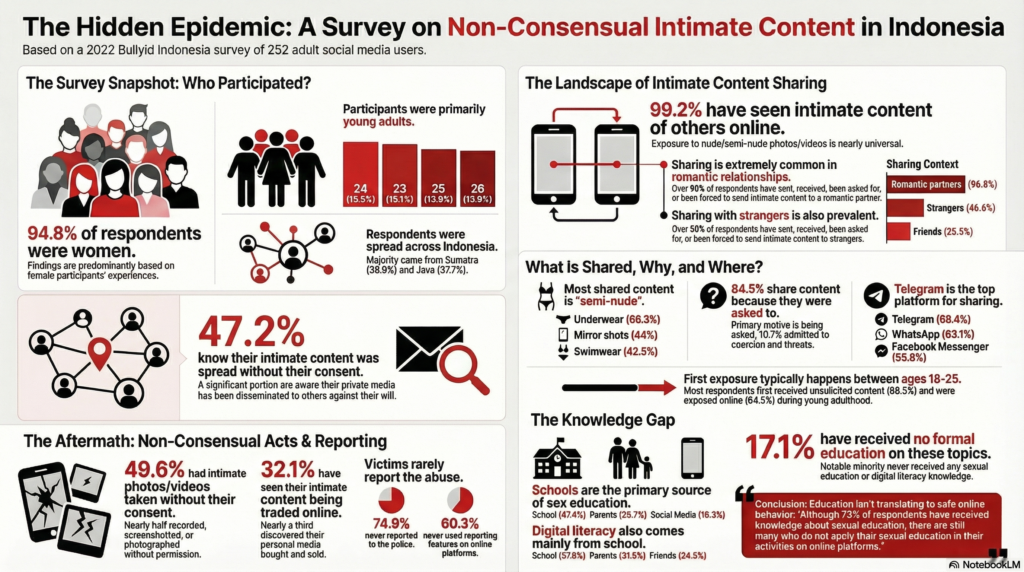
The study utilized quantitative methods involving 252 respondents aged 18 and older. The demographic breakdown shows a significant gender imbalance, with 94.8% of respondents identifying as female. Geographically, the majority of participants resided in Sumatra (38.9%) and Java (37.7%).
Prevalence of Interaction and Coercion
The survey reveals that exposure to intimate content is nearly universal among respondents, with 99.2% having seen nude or semi-nude content online. However, the data highlights alarming rates of coercion and non-consensual activity:
- Romantic Partners: While 96.8% of respondents sent intimate content to partners, 90.9% admitted they were forced to do so. Similarly, 91.3% were asked by partners to send such content.
- Strangers: Interactions with strangers are also common. Approximately 54% of respondents have sent or received nude content from strangers. Notably, 52.4% reported being forced to share content with strangers.
- Motives: The primary motive for sharing intimate content was external pressure; 84.5% of respondents cited being asked by someone else as the reason, while 10.7% cited explicit coercion or threats.
Nature of Content and Platforms
The most frequently shared content involved respondents in underwear (68.3%) or mirror shots (44%), though fully nude content was also significant (35.5%).
- Platforms: The dissemination of this content occurs primarily on messaging apps. Telegram was the most common platform (69.4%), followed closely by WhatsApp (63.1%) and Facebook Messenger (55.6%).
- Reactions: When receiving unsolicited content, the most common emotional responses were shock/terror (79.8%) and disgust (34.5%).
Non-Consensual Dissemination and Manipulation
The survey details specific experiences regarding the loss of control over intimate images:
- Unwanted Recording: 49.6% of respondents reported having photos or videos taken or recorded without their consent.
- Unauthorized Sharing: 47.2% knew their content was shared without consent, and 40.1% stated the recipient disseminated it against their will.
- Manipulation and Trading: 36.1% of respondents reported that their intimate images were edited or altered (such as pasting their face onto another body), and 32.1% had seen such content being traded online.
Reporting and Education Gap
Despite the high prevalence of non-consensual dissemination, formal reporting remains low:
- Under-reporting: 74.9% of respondents never reported incidents to the police, and 60.3% never used the reporting features available on online platforms.
- Education: While nearly half of the respondents received sex education at school (47.4%) and digital literacy training (37.8%), a significant portion (17.1%) received neither.
Conclusion
The report concludes that while awareness of intimate content dissemination exists, many users—particularly victims in romantic relationships—lack the courage or knowledge to report abuse. Bullyid Indonesia suggests that current educational efforts are insufficient; although 73% of respondents had some sexual education, they often failed to apply it to online safety. The organization recommends a combined approach of sexual education and digital literacy to prevent users from becoming either victims or perpetrators