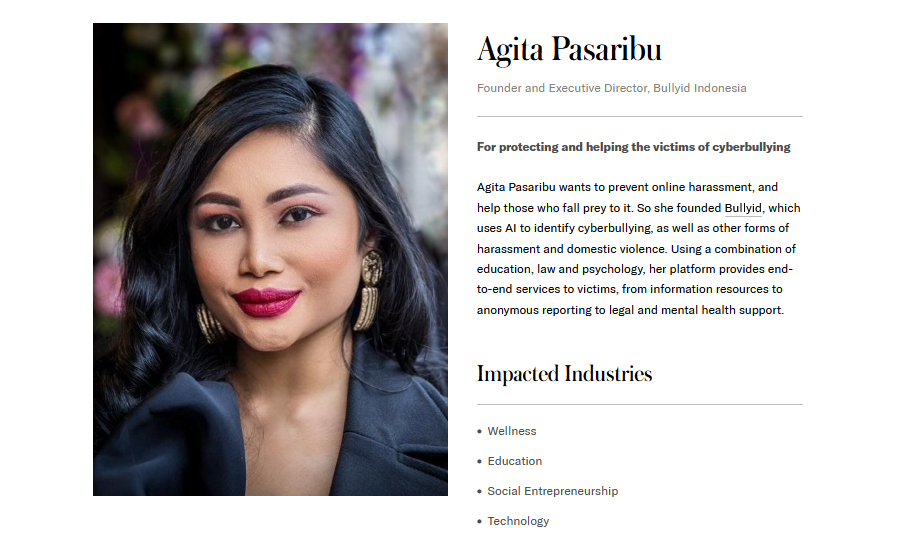
Bullyid App is pleased to announce that we have been selected for the inaugural cohort of the FemFirst Lab (FFL). The FFL aims to incubate, nurture, and support AI prototypes in Asia that address gender equality challenges through a feminist lens.
The FemFirst Lab is an initiative of the Center for Global Digital Justice (CGDJ), under the project “Building Feminist AI Futures in South and Southeast Asia.” This year’s cohort features five tech-for-good initiatives in both regions, including Bullyid App.
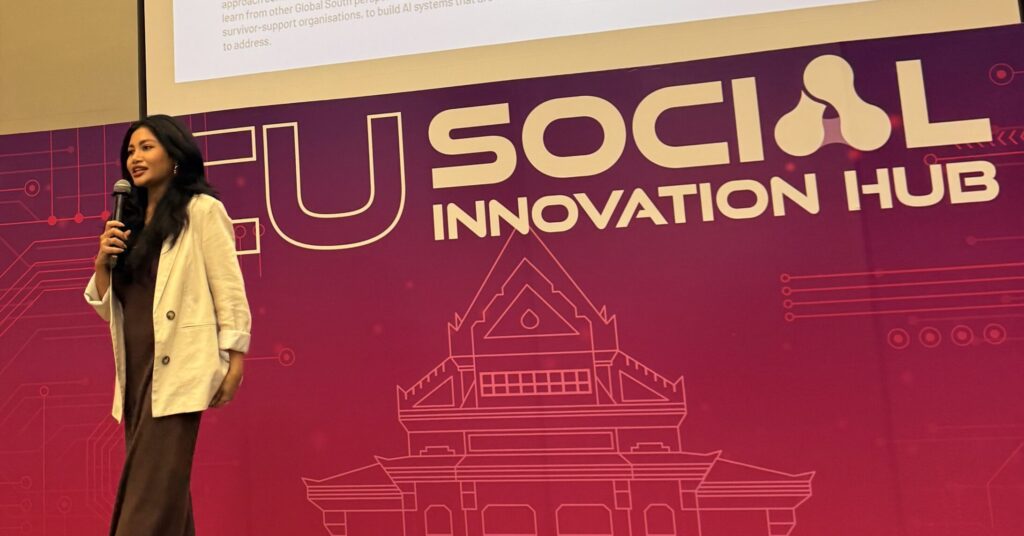
As part of her journey in the program, our executive director, Agita Pasaribu, participated in the Feminist AI Pre-Conference Workshop. The event, which took place on November 11 in Bangkok’s Chulalongkorn University, aimed to address two questions: what complex sociotechnical, ethical, and ecological dilemmas (and beyond) do actors in the pipeline face in the pursuit of feminist AI principles? Further, how can such constraints be negotiated or confronted in practice, and how can feminist solidarity models support these efforts?
Based on her experience in advocating against technology-facilitated gender-based violence (TFGBV) and providing support for victim-survivors, Agita proposed an expansion of our current reporting system. Often, victim-survivors reach out to us outside of work hours unequipped with evidence. These cases can also occur across borders, with perpetrators or victim-survivors themselves living overseas. To solve this issue, Agita discussed the possibility of developing an AI model that is trained on the most recent regulations in Indonesia and other countries. This AI model would then provide guidance to preserve evidence, report to social media platforms and authorities, as well as seeking legal and psychological support. Ultimately, the model does not serve as a replacement for human experts, but rather a supplement to improve the justice-seeking process.
About Bullyid App
Bullyid App is an Indonesian technology nonprofit operated by NMA Foundation providing survivor-centered legal, psychological, and digital-safety support for people experiencing online harm and technology-facilitated gender-based violence. Our NCII Help Center supports adults affected by the non-consensual sharing, threatened sharing or misuse of intimate images, including sextortion and image-based sexual abuse.
Source: